When you look at the fruit of a tree, you can tell what kind of tree it is. That was Jesus’ simple but profound test for truth: “You will know them by their fruits” (Matthew 7:16). If we apply this same test to Islam, the results are sobering. The fruit of Islam — historically and culturally — reveals not a relationship of love between Creator and creation, but a system of control, submission, and fear.
At its core, Islam is not about compassion, freedom, and communion with God but about mastery over people. Its very name, Islam, means “submission,” not intimacy, friendship, or love. The Qur’an presents Allah less as a Father who loves his children and more in line with the concept of divine authority as a tyrant ruler who demands absolute obedience. Where the God of the Bible invites, Allah commands. Where Christ says, “I no longer call you servants but friends” (John 15:15), Islam teaches that man’s highest calling is to be a martyr whose personal will must be extinguished before divine decree, which is to conquer and subdue all others to Islam.
The difference is not semantic—it is spiritual.
The Face of Control
As an example, consider one of the most visible symbols of Islam’s theology: the veiling of women. Why must so many Muslim women cover their faces? Why not the men? What kind of “god” fears a woman’s countenance so much that he demands it be erased from public life?
Your face is sacred. It is part of the divine image (tselem Elohim) in which every human being was made (Genesis 1:27). It is the window through which your personality, emotions, and inner light are expressed. To hide the face is not a gesture of holiness but of erasure. It silences the individuality that God Himself breathed into us when He said, “Let us make humankind in our image.”
The idea that only a husband should see a woman’s face is not an expression of reverence; it is a reflection of possession. It says, “I own her.” The veil becomes a spiritual metaphor for Islam itself: a religion that conceals rather than reveals, that binds rather than frees, that prioritizes totalitarian uniformity over identity.
The God of Scripture, by contrast, reveals His face and invites us to do the same. The psalmist’s prayer is, “Let your face shine upon your servant” (Psalm 31:16). In Christ, “the light of the knowledge of the glory of God [shines] in the face of Jesus Christ” (2 Corinthians 4:6). To see God’s face is to know Him. When you cover someone’s face in fear, they die a little each day.
Fear vs. Freedom
The God of the Bible creates out of love, not need. He invites relationship, not coercion. He gives commandments, yes—but always within a covenant of grace, and the goal is a better society, not the oppression of others. Even when God disciplines, He does so as a loving Father who seeks to restore, not as a dictator who seeks to crush His rival.
In contrast, the Allah of Islam is utterly transcendent yet relationally and emotionally distant. He cannot be known in any personal sense. To “believe” in him is to submit to a long list of oppressive rules; to love him is to obey without question. The highest virtue is not holiness or compassion but compliance.
Such a theology inevitably produces societies of control. We see this in regimes that enforce prayer by threat, punish apostasy with death, and police every corner of personal life—from diet to dress to private thought. When faith becomes fear of punishment rather than desire for God, what remains is not religion but tyranny in divine clothing.
The God Who Sets Free
The God revealed in Scripture could not be more different. He is a liberator, not a lawgiver enthroned in anxiety. He delivers slaves from Egypt. He lift sinners up. He touches lepers. He eats with the outcasts. He gives His Spirit to sons and daughters alike. And He gives the most scandalous freedom of all — free will — the liberty to say “no.”
The true God does not hide His children’s faces; He shines His own upon them. He does not crush individuality; He sanctifies it. The God of the Bible delights in diversity, creativity, and the human spirit made alive through love.
This is why Islam and the Gospel are not two paths to the same mountain. They are two opposing visions of God and humanity. One demands subjugation; the other invites transformation. One thrives on control; the other breathes freedom.
If the fruit of a tree reveals its roots, then the conclusion is inescapable: Allah is not the God of the Bible. The God of Abraham, Isaac, and Jacob is not a despot to be appeased, but a Father to be known. His kingdom is not ruled by fear, but by love—and “perfect love casts out fear” (1 John 4:18).
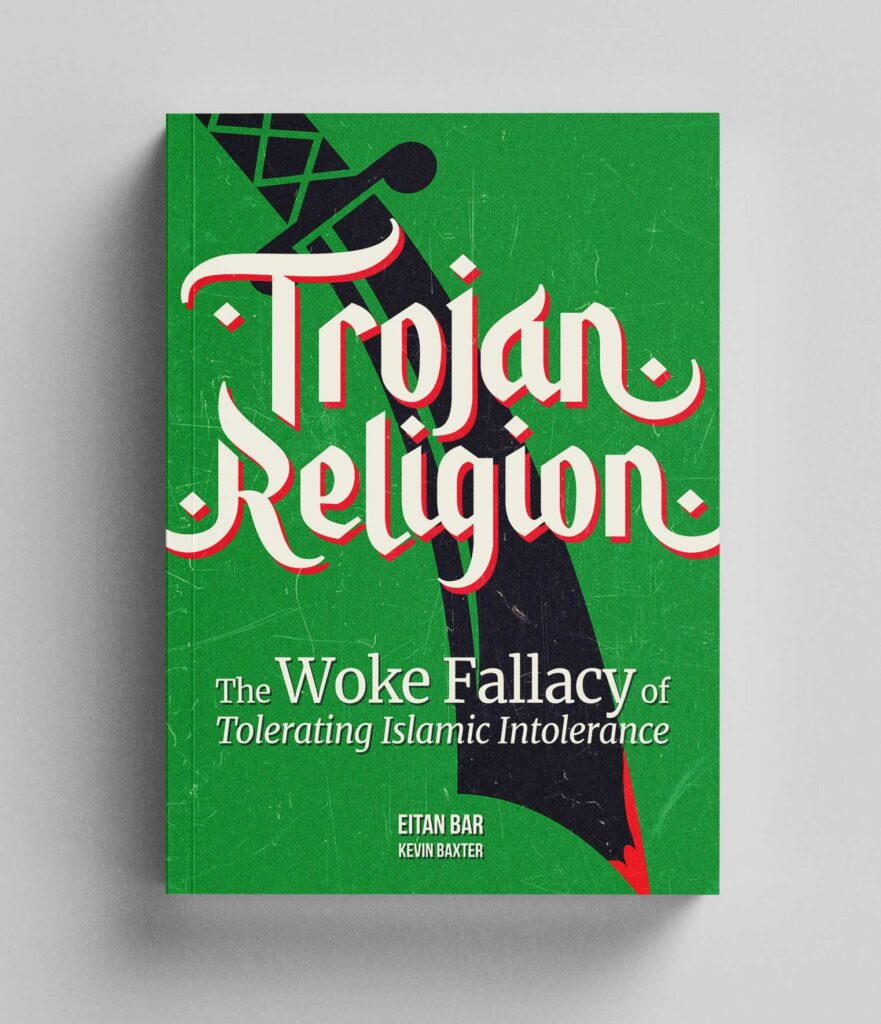
This was a short excerpt from my book, “Trojan Religion: The Woke Fallacy of Tolerating Religious Intolerance.”